The University of Montana
College of Forestry and Conservation
UM Home | UM A-Z | UM Search


Biogeochemistry During Long-Term Soil Development

Well-constrained Mendenhallcarbon:nitrogen:phosphorus (C:N:P) ratios in planktonic biomass have greatly advanced our understanding of biological processes and nutrient cycling in marine ecosystems, and have motivated ecologists to search for similar patterns in terrestrial ecosystems.  Recent research by our group and others suggests similar organization in the soil microbial biomass, and this observation provides another potentially useful tool for assessing the nature of nutrient limitation on land. In addition, human activities are driving profound changes in the inputs and abundance of C, N and P globally, and we are interested in how changes in the relatively availability element affects biogeochemical cycles in terrestrial ecosystems.

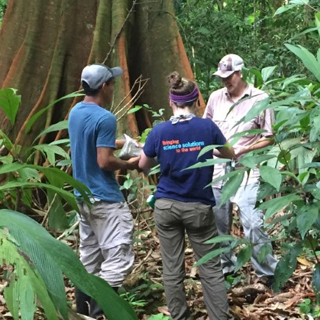
We are studying the relationship between element abundcance and ecosystem processes by utilizing both short (< 100 years following glacial retreat) and long (4000 ky in the Hawaiian Islands) chronosequences. With colleagues at the University of Colorado, I am testing the relationship between soil and microbial biomass element ratios and measures of microbial community activity and composition. This research includes a suite measurements in recently exposed soils in Peru and Alaska (above), where our data show that these early microbial communities are capable of high rates of nitrogen (N) fixation, phosphorus (P) cycling and photosynthesis many years before the establishment of plants. In addition, our data suggest that as soils develop, both the structure and the function of the soil microbial community changes in predictable ways with C, N and P availability. We currently seeking funding to explore whether microbial and biogeochemical succession follows patterns of plant community succession and assembly in 3 rapidly deglaciating sites.

Finally, I am interested in whetherHawaii the nature of nutrient limitation belowground is consistent with that belowground. Our data suggest that there may be differences in the nutrients that limit aboveground and belowground processes. For example, in spite of evidence that N strongly limits aboveground productivity at a young site in Hawaii (Thurston), our data shows that P (and not N) availability limits the decomposition of soluble carbon. Thus, we we are using a suite of resource manipulation experiments to address the generality and implications of these results. This research culminated in funding of an NCEAS workshop addressing nutrient limitation in the tropics, to be held from 2008 - 2010 in Santa Barbara.


For questions about the research we do, or for information about opportunities in the lab, please contact Cory Cleveland at:

Phone: 406-243-6018 | Fax: 406-243-6656
Email: cory.cleveland@umontana.edu | Office: CLP 464